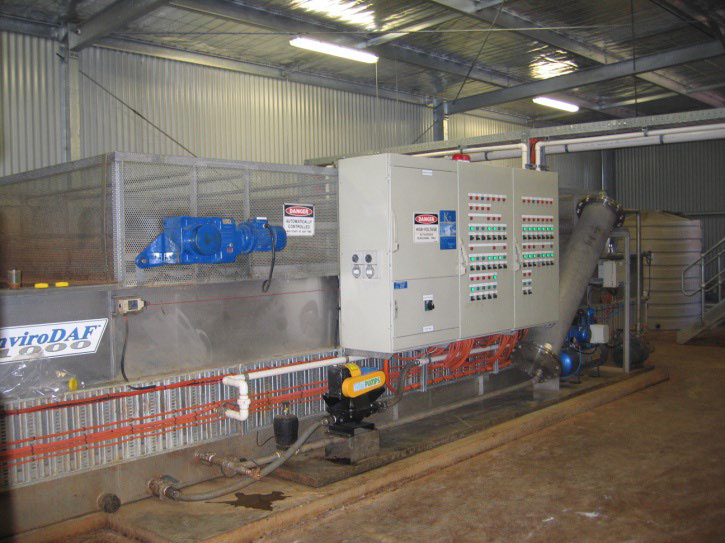
Wastewater generated from poultry further processing contains high levels of fats, solids and potentially starch, resulting in fairly high BOD. Depending on the production and cleaning cycles, concentrations and flows vary considerably.
Ingham’s FPP plant at Thomastown used to discharge wastewater flows in excess of 500KL/day to sewer via a grease trap. Naturally, with such a process, the quality of the wastewater being discharged to sewer was unacceptable.
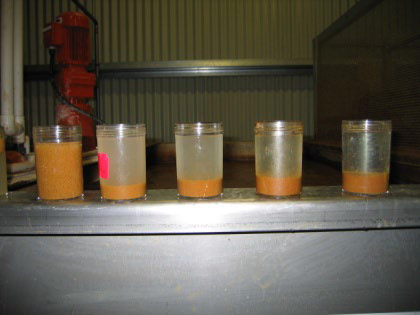
Trials were conducted treating samples of wastewater with and without chemicals. The results are shown in the performance table below.
The overall wastewater process involved mechanical screening to remove large solids to 1mm, followed by balancing.
The balance tank in this case was sized to hold 70% of one day’s production to allow for effective equalisation of flow and waste concentrations.
The wastewater was pumped from the balance tank to the DAF at a constant rate.
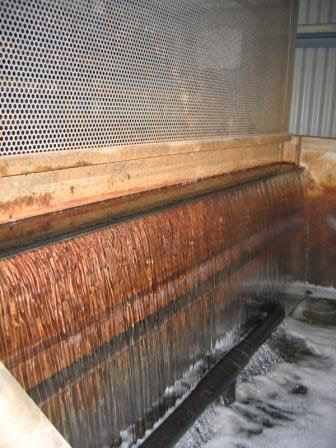
The DAF system was designed to accept chemicals for possible future requirements or recycling opportunities. The sludge removed from the DAF system is dewatered in a belt press.
Since the initial start up of the plant, the system has operated trouble free with excellent results.
| Analyte | Raw Water | Without Chemicals | With Chemicals |
|---|---|---|---|
| BOD | 3000–8000 mg/L | 30–50% reduction | 70–90% reduction |
| SS | 1500–6000 mg/L | 60–75% reduction | 95–99% reduction |
| O&G | 100–1500 mg/L | 60–80% reduction | 96–99% reduction |
See more about Tasman Waters manufacturing water treatment options